Pinguicula heterophylla
Pinguicula heterophylla

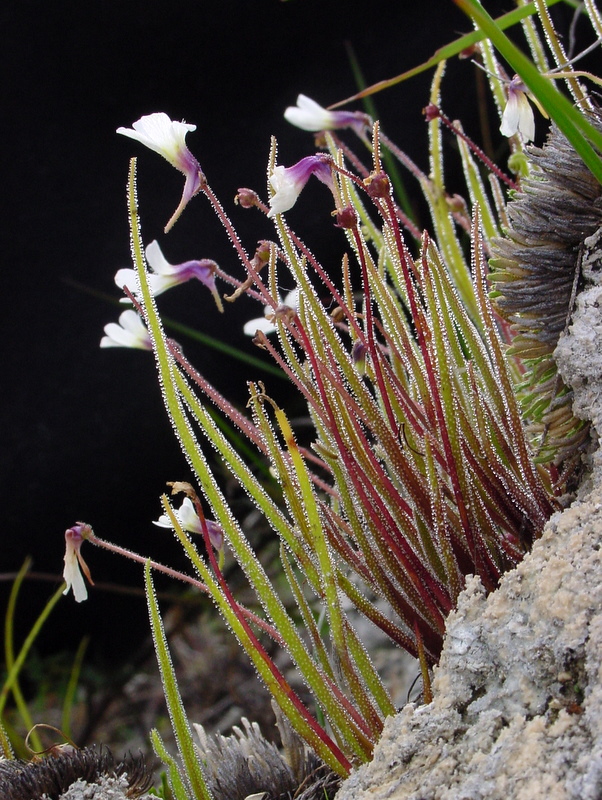
Table of Contents
Use only distilled water, reverse osmosis (RO), or rainwater — ideally under 50 ppm TDS. Tap water, bottled mineral water, and softened water contain calcium, magnesium, and sodium that accumulate in the substrate and kill carnivorous plants within weeks. This is the #1 cause of cultivation failure.
Introduction & Discovery
Pinguicula heterophylla is a captivating Mexican butterwort that takes its name from the Greek 'heteros' meaning different and 'phyllon' meaning leaf, a direct reference to the strikingly different leaf forms this species produces across its annual growth cycle. Native to the limestone and volcanic rock formations of central Mexico, this species showcases the seasonal dimorphism characteristic of Mexican butterworts in a particularly dramatic fashion. The summer carnivorous rosette features broad, flat, glandular leaves that spread outward to capture small insects, while the winter form contracts into a tight bud of thick, succulent, non-carnivorous leaves that endure months of drought. P. heterophylla produces attractive flowers in shades of pink to magenta on slender scapes that rise well above the rosette, adding ornamental value to an already interesting plant. In cultivation, this species has earned a reputation as a rewarding and moderately easy grower for those familiar with the basic requirements of Mexican Pinguicula. It thrives on bright windowsills in well-draining mineral substrate and adapts well to the conditions found in typical home environments. The species has become increasingly available through specialist nurseries and collector networks, though it remains less widely grown than the ubiquitous P. moranensis or P. esseriana. For growers seeking to expand their Mexican Pinguicula collection beyond the most common species, P. heterophylla offers a distinctive combination of seasonal drama, attractive flowers, and manageable cultivation requirements that makes it a worthy addition to any collection.
Discovery & Naming
Pinguicula heterophylla was described by the prolific German-Mexican botanist Ernst Brandegee in the early twentieth century, based on specimens collected from mountainous regions of central Mexico. The species name directly addresses the notable leaf heteromorphism that characterizes this plant, a feature that was novel and noteworthy to European botanists encountering these Mexican butterworts for the first time. The concept of a carnivorous plant that voluntarily relinquished its insect-trapping leaves for half the year was counterintuitive to researchers accustomed to the year-round carnivory of European Pinguicula species. Throughout the twentieth century, P. heterophylla was variously classified and reclassified as taxonomists struggled to delimit species within the complex and variable Mexican Pinguicula group. The revisionary work of Sergio Zamudio Ruiz in the 1990s and 2000s helped clarify the species boundaries, establishing P. heterophylla as a distinct entity based on a combination of morphological characters including leaf shape, flower structure, and geographic distribution. Molecular phylogenetic analyses have confirmed its placement within the Mexican clade of Pinguicula, closely allied to other species adapted to mineral substrates in the central Mexican highlands. The species entered cultivation through collector imports beginning in the 1980s and has since become moderately well-established in European and North American collections. Its availability has been enhanced by successful propagation through leaf pullings and division, allowing wider distribution through the carnivorous plant community without reliance on wild-collected material.
Trapping Mechanism
The trapping mechanism of Pinguicula heterophylla follows the fundamental flypaper model shared by all butterwort species, employing a sophisticated two-gland system to capture, digest, and absorb nutrients from small arthropod prey. The summer carnivorous leaves are equipped with two morphologically distinct gland types that work in concert. The stalked glands, elevated above the leaf surface on multicellular pedestals approximately 0.2 to 0.5 millimeters in height, produce conspicuous droplets of mucilage that glisten in the light, resembling tiny dewdrops. This mucilage serves as both attractant and adhesive, its reflective properties potentially mimicking water or nectar to draw in small flying insects. The mucilage itself is a complex mixture of polysaccharides with notable viscoelastic properties, stretching rather than breaking when disturbed, which prevents captured prey from pulling free. The sessile glands are flat, disc-shaped structures embedded in the leaf epidermis, numbering in the thousands per leaf. These glands remain inactive until stimulated by the chemical and mechanical signals produced by captured prey. Upon activation, they secrete a digestive fluid containing acid proteases, esterases, phosphatases, and other enzymes that progressively dissolve the soft tissues of the captured organism. The broad, relatively flat leaves of P. heterophylla provide an effective trapping surface that can capture insects ranging from tiny springtails to small flies several millimeters in length. Upon prey capture, the leaf margins may curl slightly inward over a period of hours, a slow thigmonastic response that helps pool digestive fluids around the prey and prevents its removal by rain or wind. The complete digestion cycle typically requires three to seven days, after which the nutrients are absorbed through the sessile glands into the plant's vascular system.
Native Range & Distribution Map
Distribution map showing the native range of Pinguicula heterophylla.
Biology & Trapping Mechanism
Pinguicula heterophylla is a perennial herbaceous plant that epitomizes the heterophyllous growth strategy that has evolved in the Mexican Pinguicula clade. The summer carnivorous rosette consists of broadly obovate to spatulate leaves that spread outward to form a relatively flat rosette measuring four to eight centimeters in diameter. These leaves are bright green, thin-textured, and densely covered with stalked and sessile glands on their upper surfaces. The leaf margins are slightly involute, and the leaf surfaces have a glistening, dewy appearance from the mucilage secretions. As the dry season approaches, typically in late autumn in cultivation, the plant undergoes a notable morphological transformation. The carnivorous leaves are progressively replaced by thick, succulent, non-carnivorous leaves that form a tight, compact rosette or bud. These winter leaves are ovate to nearly circular, fleshy, and often tinged with reddish or bronze coloration, especially under bright light. The root system is fibrous and relatively shallow, anchoring the plant in thin soil accumulations on rock surfaces. Flowers are produced on glandular-pubescent scapes measuring eight to eighteen centimeters in height. The bilaterally symmetrical corolla has five lobes that are pink to magenta in color with a white or pale throat and a moderate spur. The flowers are among the more colorful in the Mexican Pinguicula group and contribute significantly to the plant's ornamental appeal. Pollination is accomplished by small bees and flies, though self-pollination is possible. Seeds are extremely fine and wind-dispersed. The chromosome number is 2n = 32, consistent with other Mexican species in the genus.
Prey & Feeding Ecology
In its native Mexican habitats, Pinguicula heterophylla captures a diverse assemblage of tiny arthropods that inhabit the moist, shaded environments of limestone cliffs and rock faces. The primary prey consists of small Diptera, particularly fungus gnats of the families Mycetophilidae and Sciaridae, which are abundant in the humid microhabitats where the plant grows. These delicate flies, typically measuring one to three millimeters in body length, are attracted to the glistening mucilage on the leaf surface and become entrapped upon contact. Springtails are another significant dietary component, their abundance on moist mineral surfaces making them consistently available prey items throughout the growing season. Small parasitic wasps, aphids, thrips, and minute beetles contribute to the overall prey spectrum. The broad, flat summer leaves of P. heterophylla present an effective horizontal trapping surface that intercepts insects approaching from above, a geometry well-suited to the cliff-face habitats where insects tend to fly close to the substrate. The nutritional contribution of carnivory is substantial for this species, as the mineral substrates on which it grows provide minimal available nitrogen and phosphorus. Research on related Mexican Pinguicula has demonstrated that plants with access to insect prey produce significantly more biomass, more flowers, and set more seed than plants grown without prey access. In cultivation, P. heterophylla readily captures the fungus gnats that are common pests in indoor plant collections, providing a practical benefit alongside its ornamental value. Supplemental feeding with small insects or rehydrated freeze-dried bloodworms can enhance growth in insect-poor environments but should be done sparingly to avoid mold development on the leaves.
Comparison with Similar Species
Pinguicula heterophylla shares many characteristics with the broader Mexican Pinguicula group but can be distinguished from similar species through careful observation of its morphological features. Compared to P. moranensis, the most widespread and variable Mexican butterwort, P. heterophylla tends to produce somewhat narrower summer leaves and generally more intensely colored flowers in the pink to magenta range, as opposed to the broader color range of P. moranensis which includes pink, magenta, violet, and white forms. The winter rosettes of both species are broadly similar in structure but may differ in leaf shape and coloration. Against P. emarginata, P. heterophylla can be distinguished by its larger overall size, broader summer leaves, and the absence of emarginate petal tips on its flowers. The comparison with P. esseriana highlights the size difference: P. heterophylla is substantially larger, with rosettes reaching four to eight centimeters versus the two to three centimeters typical of P. esseriana. Flower color also differs, with P. heterophylla tending toward warmer pink tones and P. esseriana toward cooler violet. Within the Mexican group, the species illustrates the shared adaptive strategy of seasonal dimorphism, with all members producing succulent winter rosettes, in contrast to the European Pinguicula species that form cold-hardy hibernacula. The substrate requirements also diverge fundamentally from European species: P. heterophylla needs alkaline mineral media rather than the acidic bog substrates that European species demand. This distinction makes Mexican and European Pinguicula essentially separate groups in cultivation practice, requiring different approaches to growing media, watering schedules, and dormancy management.
Reproduction & Propagation
Pinguicula heterophylla propagates readily through several methods, with leaf pullings being the most commonly employed technique among home growers. To take a leaf pulling, select a healthy, fully expanded summer leaf from the outer portion of the rosette. Grasp the leaf firmly at its base and pull it away from the crown with a gentle twisting motion, ensuring the white basal tissue detaches with the leaf. This basal meristematic tissue is essential for regeneration. Place the detached leaf flat on the surface of moist perlite and vermiculite, with the base in light contact with the substrate. Maintain warm, bright conditions and keep the substrate lightly moist. Plantlets will emerge from the leaf base within three to six weeks, and once they develop their own root systems and reach approximately one centimeter in diameter, they can be potted individually. Leaf pullings from winter rosette leaves are also possible and can be taken as the plant transitions into or out of dormancy. Division of offsets provides an even simpler propagation method when available. Mature plants may produce lateral offsets over time, which can be separated during spring repotting. Each division should have viable roots and be potted in fresh mineral substrate. Seed propagation offers the opportunity to produce large numbers of genetically diverse plants. Seeds are surface-sown on moist mineral substrate without covering, maintained in bright light at twenty to twenty-five degrees Celsius, and typically germinate within three to eight weeks. Seedlings are extremely small and grow slowly for the first several months, reaching flowering size in approximately one to two years. Cross-pollination between different individuals improves seed set and genetic diversity. All propagation methods benefit from sterile technique and fresh, well-draining substrate to minimize fungal problems.
Cultivation & Substrate
Pinguicula heterophylla responds well to standard Mexican Pinguicula cultivation practices, thriving in a well-draining mineral substrate with seasonal watering adjustments to match its growth cycle. The substrate should consist of a mix of perlite, vermiculite, and fine pumice in roughly equal proportions, with an optional addition of crushed limestone or dolomite to maintain a neutral to slightly alkaline pH. Some growers add a small proportion of calcined clay to improve moisture buffering during the growing season. The pot should be small relative to the plant, as Mexican Pinguicula generally do better in modestly sized containers that prevent moisture from lingering in unused substrate. During the summer growing season, keep the substrate evenly moist but not waterlogged. Top-watering with good drainage is preferable to deep tray water. Allow the surface to approach dryness between waterings during the active growth period. As the plant begins its transition to the winter rosette, reduce watering gradually. During full dormancy, water sparingly, once every two to three weeks, just enough to prevent complete substrate desiccation. Light should be bright and ideally include some direct morning or late afternoon sun. A south or east-facing windowsill in the Northern Hemisphere provides suitable conditions. Under artificial lights, twelve to fourteen hours of moderate to bright illumination produces healthy, compact growth. Temperature preferences are moderate, eighteen to twenty-eight degrees Celsius during summer and ten to twenty degrees during winter. The species tolerates brief cool periods but should not be exposed to frost. Fertilization is generally unnecessary if the plant captures insects; if supplementation is desired, a very dilute orchid fertilizer applied as a foliar spray once monthly during the growing season is sufficient.
Substrate: Mineral mix (Mexican) or peat + sand (temperate)
Water: Distilled / Rainwater only — NEVER tap water
Light: Bright indirect to partial sun
Humidity: 50-80%
Common Mistakes to Avoid
The primary error made by growers new to Pinguicula heterophylla is applying the care protocols designed for bog-dwelling carnivorous plants, which are wholly inappropriate for this Mexican species. Standing water trays with deep water levels, peat-based substrates, and year-round moisture management will all lead to rapid decline and death. P. heterophylla requires mineral substrate, moderate watering with good drainage, and a distinct dry winter rest. Another common mistake is failing to recognize the transition to winter dormancy and attempting to reverse it by increasing water and warmth. The formation of the tight succulent rosette is a normal, healthy process that should be accommodated, not resisted. Growers who continue heavy watering as the winter leaves form risk inducing crown rot, the most dangerous condition for this species. Insufficient light is a pervasive problem that results in elongated, pale rosettes with reduced mucilage production. The plant needs bright conditions to maintain its compact form and capture insects effectively. However, sudden exposure to intense direct sun can scorch leaves that have been acclimated to lower light levels, so transitions should be gradual. Over-fertilization is occasionally an issue, as the species is adapted to nutrient-poor conditions and can be damaged by concentrated fertilizer solutions. Repotting at the wrong time, particularly during winter dormancy, disturbs the root system when the plant is least able to recover. Spring, as the new growth emerges, is the appropriate time for repotting. Finally, some growers neglect to provide adequate air circulation, leading to fungal problems in the humid environments sometimes created around these plants.
Seasonal Considerations
Spring marks the beginning of the active growth cycle for Pinguicula heterophylla, typically starting in March or April when new flat, glandular leaves emerge from the center of the compact winter rosette. This is the time to gradually increase watering frequency, moving from the sparse dormancy regime to regular moisture. Repotting should be done at this time if the substrate has degraded or the plant needs a fresh start. As the summer rosette develops, provide consistent moisture and bright light to support healthy growth and mucilage production. Summer is the peak growing and flowering season, from May through August. The rosette should be fully expanded with glistening carnivorous leaves. Water regularly, allowing the substrate to approach dryness between waterings but not remaining dry for extended periods. Flower scapes will appear and may produce successive blooms over several weeks. This is the best time for leaf pullings and other propagation activities. Autumn, from September through October, brings the transition to dormancy. Watch for the appearance of thicker, more compact leaves from the center of the rosette and the yellowing of outer carnivorous leaves. Begin reducing watering as the transition progresses. Winter, from November through February, is the rest period. The plant should be in its compact succulent rosette form. Water only enough to prevent complete desiccation, approximately once every two to three weeks. Provide bright, cool conditions with temperatures of ten to eighteen degrees Celsius. The winter rosette, often tinged with reddish or bronze hues, is attractive in its own right. Resist the urge to water frequently or provide warmth beyond what is natural for the season.
Seasonal Care Calendar
🌱 Spring (Mar-May)
Water: Moderate
Feeding: No feeding
Monitor growth and adjust care as needed.
☀️ Summer (Jun-Aug)
Water: Moderate
Feeding: No feeding
Monitor growth and adjust care as needed.
🍂 Autumn (Sep-Nov)
Water: Moderate
Feeding: No feeding
Monitor growth and adjust care as needed.
❄️ Winter (Dec-Feb)
Water: Moderate
Feeding: No feeding
Monitor growth and adjust care as needed.
Diseases & Pests
Pinguicula heterophylla is a generally robust species when grown under appropriate conditions but is susceptible to several diseases, most of which are triggered by cultural errors. Crown rot, caused by fungal pathogens including Botrytis, Pythium, and Fusarium, is the most serious and common affliction. It typically occurs when the central growing point is subjected to prolonged moisture, whether from overwatering during dormancy, overhead watering that pools in the rosette center, or waterlogged substrate. Symptoms include softening and darkening of the innermost leaves, progressing to complete collapse of the crown. Early intervention involving removal of affected tissue with a sterile blade and fungicide application can save the plant if the damage has not penetrated the entire growing point. Root rot from overwatering presents similar risks and is prevented by maintaining well-draining substrate and appropriate watering schedules. Mealybugs are the most common arthropod pest, appearing as white cottony masses in the leaf axils and between the tightly packed leaves of the winter rosette. Treatment with isopropyl alcohol applied by cotton swab effectively controls small infestations. Fungus gnats, while serving as natural prey for the summer leaves, can have larvae that damage roots in overly wet substrates. Scale insects are occasional pests treatable by the same methods used for mealybugs. Virus infections are rare but possible, causing distorted growth and unusual mosaic patterns on leaves; affected plants should be isolated and destroyed to prevent spread. Leaf scorch from excessive direct sun exposure produces brown, papery patches and can be prevented by gradual light acclimation.
Indoor Growing & Terrariums
Pinguicula heterophylla is well-suited for indoor cultivation, thriving in the moderate conditions of a typical home environment with minimal special accommodation. The ideal indoor position is a bright windowsill receiving several hours of indirect light and ideally one to two hours of gentle direct sun, particularly morning or late afternoon sun. East-facing windows are optimal in many cases, while south-facing windows may benefit from a sheer curtain during the hottest months. If natural light is insufficient, a small LED grow light provides an excellent supplement, positioned fifteen to twenty centimeters above the plant and run for twelve to fourteen hours daily. The species tolerates the moderate humidity levels found in most homes, typically thirty to fifty percent, without requiring supplemental humidification. This makes it significantly easier to grow indoors than humidity-demanding species like Nepenthes or tropical Drosera. Watering is straightforward: during the growing season, water from the top when the substrate surface feels nearly dry, and during winter dormancy, water very sparingly. Room temperatures of eighteen to twenty-five degrees Celsius are suitable for most of the year. A slightly cooler location during winter encourages natural dormancy. The attractive flowers, produced freely during the growing season, add color and interest to the windowsill display. The pink to magenta blooms are among the more vivid in the Mexican Pinguicula group and provide weeks of flowering when the plant is healthy and well-lit. P. heterophylla also captures fungus gnats effectively, providing biological pest control for indoor plant collections. Its moderate size, typically four to eight centimeters across, makes it suitable for small decorative pots and mixed plantings with other Mexican Pinguicula species.
Terrarium Setup
Pinguicula heterophylla can be successfully grown in a terrarium, though the setup should prioritize drainage and ventilation rather than the high-humidity, moisture-retentive environments designed for tropical carnivorous plants. Select a terrarium with good ventilation options, such as a mesh-topped enclosure or one with adjustable vents. Begin with a drainage layer of expanded clay pellets approximately two to three centimeters deep, covered with landscape fabric. The growing medium should be the standard Mexican Pinguicula mineral mix of perlite, vermiculite, and pumice. Position the plant in the substrate at ground level, ensuring the crown is not buried. For a naturalistic presentation, incorporate small pieces of limestone or volcanic rock around the plant. Lighting is critical and should be provided by a quality LED grow light positioned ten to twenty centimeters above the plant, running for twelve to fourteen hours daily. Insufficient light is the most common failure point in terrarium-grown Mexican Pinguicula. Ventilation must be maintained to prevent excessive humidity and stagnant air, which promote fungal infections. If the terrarium is enclosed, open it daily for air exchange or install a small fan for continuous gentle airflow. Temperature should remain between eighteen and twenty-eight degrees Celsius during the growing season. Companion plants should share similar requirements for drainage and moderate humidity. Other Mexican Pinguicula species, small Tillandsia, and miniature succulents make compatible neighbors. Avoid pairing with moisture-demanding tropical species. The most important seasonal adjustment is the winter rest period, during which the terrarium should be allowed to dry somewhat and misting reduced to match the plant's dormant state. The compact winter rosette continues to provide visual interest during this period.
Landscape & Bog Garden Use
Depending on climate, Pinguicula heterophylla may be grown outdoors in a bog garden or container water tray during the growing season.
Conservation & Collector Notes
Pinguicula heterophylla faces conservation challenges common to many Mexican butterwort species: restricted distribution, specialized habitat requirements, and ongoing threats from human activities. The species inhabits limestone and volcanic rock formations in central Mexico, environments that are increasingly impacted by quarrying, road construction, urban expansion, and agricultural development. The plants' dependence on specific microsites, typically shaded, moist cliff faces with thin mineral soil, means that even small-scale habitat disturbance can eliminate entire populations. Deforestation of surrounding cloud forest or montane vegetation can alter the moisture regime of the cliff habitats, as the removal of tree cover reduces fog interception and increases exposure to desiccating winds. Climate change poses an additional long-term threat by potentially shifting rainfall patterns and reducing cloud forest extent in central Mexico. The species has not been formally assessed for the IUCN Red List, but it is recognized as requiring protection under Mexican environmental legislation. Some populations occur within or adjacent to protected natural areas, providing a degree of official safeguarding. The species is well-established in cultivation, with propagation through leaf pullings and division ensuring that horticultural demand can be met without wild collection. Conservation priorities include protecting remaining habitat, studying population dynamics, and maintaining genetically diverse ex-situ collections. Supporting botanical research and conservation initiatives in central Mexico is the most effective way for international enthusiasts to contribute to the long-term survival of this and other Mexican Pinguicula species.
Collector Notes
Among Mexican Pinguicula collectors, P. heterophylla occupies a position of moderate prominence as a species that combines attractive flowers, interesting seasonal dimorphism, and reliable growth habits. It is less commonly encountered in collections than the ubiquitous P. moranensis or the miniature P. esseriana but is well-regarded by those who grow it. The species' pink to magenta flowers are particularly appealing and distinguish it from the violet to lavender blooms of many other Mexican species. Several locality forms may circulate among collectors, with subtle differences in leaf shape, flower color, and rosette size. Preserving locality data when sharing plants is encouraged, as this information supports both horticultural and conservation objectives. The winter rosette, with its compact succulent form and reddish tints, provides year-round display interest. For shows and exhibitions, the plant is most impressive during peak flowering when multiple scapes bearing colorful blooms rise above the glandular rosette. P. heterophylla crosses readily with other Mexican Pinguicula in cultivation, and growers maintaining pure species should take precautions to prevent accidental hybridization. Named hybrids involving this species exist but are less widely distributed than hybrids of more common species. When acquiring plants, source from reputable nurseries that propagate from cultivated stock. The species' ease of propagation through leaf pullings means that wild collection is entirely unnecessary and should not be supported.
Ethnobotany & Cultural Significance
The ethnobotanical context of Pinguicula heterophylla is embedded within the broader tradition of Pinguicula use in Mexican folk culture and traditional medicine. Throughout the mountainous regions of central Mexico where P. heterophylla grows, indigenous and rural communities have recognized and utilized sticky-leaved butterwort plants for various purposes across generations. The mucilage-coated leaves have been applied as natural adhesive bandages for small cuts and skin irritations, with the enzymatic properties of the mucilage believed to promote healing. In some communities, the leaves have been used in traditional cheese-making, with the protease enzymes in the carnivorous mucilage serving as a natural curdling agent for milk, a practice that parallels documented Scandinavian traditions with European Pinguicula species. Infusions made from Pinguicula leaves have been used in folk remedies for coughs and respiratory congestion, though the scientific basis for this application remains largely unstudied. The plants are sometimes known locally as 'violeta de roca' or 'hierba de la piedra,' names that reference both their flower color and their rock-dwelling habitat. Beyond utilitarian uses, carnivorous plants including Pinguicula have captured human imagination through their ability to trap and digest insects, inspiring folklore and superstition in rural communities. In the modern era, the cultural significance of P. heterophylla lies primarily in the international carnivorous plant community, where it is valued both as a horticultural specimen and as a representative of the extraordinary diversity of Mexican butterworts. The species also serves an educational role, demonstrating concepts of plant adaptation, seasonal biology, and nutrient-poor ecology.
Frequently Asked Questions
What makes Pinguicula heterophylla different from other Mexican butterworts?
While all Mexican Pinguicula share the heterophyllous growth habit of producing different leaf types across seasons, P. heterophylla is distinguished by its combination of moderately broad summer leaves, particularly vivid pink to magenta flowers, and the specific proportions of its winter succulent rosette. The species name itself emphasizes this leaf dimorphism, highlighting it as a defining characteristic. Careful comparison of flower shape, leaf proportions, and spur morphology distinguishes it from similar species.
Can I keep Pinguicula heterophylla in the same conditions as Venus flytraps?
No, their requirements are fundamentally different. Venus flytraps need acidic peat substrate, standing water, and cold winter dormancy, while P. heterophylla requires alkaline mineral substrate, moderate watering with good drainage, and a dry winter rest at cool but not freezing temperatures. Attempting to grow them in the same conditions will almost certainly kill one or both plants. They can share a growing space if given separate pots with appropriate substrate and individual watering.
How do I know when my Pinguicula heterophylla is entering dormancy?
The transition is signaled by the appearance of smaller, thicker, more compact leaves from the center of the rosette. These winter leaves are noticeably different from the flat, thin, glandular summer leaves. Simultaneously, the outer summer leaves begin to yellow and dry. This transition typically occurs in autumn as days shorten and temperatures cool. Reduce watering gradually as you observe these changes.
Should I pollinate the flowers to get seeds?
If you want to produce seeds, hand pollination can be helpful, especially in indoor environments where natural pollinators are absent. Use a small paintbrush or toothpick to transfer pollen from the anthers to the stigma of the same or a different flower. Cross-pollination between different individuals typically produces better seed set than self-pollination. Seeds are extremely fine and should be sown immediately on moist mineral substrate.
My Pinguicula heterophylla's leaves are not sticky. Is it dead?
Not necessarily. If the plant is in its winter succulent rosette form, the absence of sticky leaves is completely normal, as the winter leaves are non-carnivorous. If the plant should be in its summer growth phase and the leaves are flat but not sticky, insufficient light is the most likely cause. Move the plant to a brighter location or increase artificial lighting. Very low humidity can also cause mucilage to evaporate rapidly, making the leaves appear less sticky than they actually are.
Explore Our Other Encyclopedias
12,000+ expert articles on tropical & exotic plants
Quick Reference Summary: Pinguicula heterophylla
Golden Rule: Pure water, poor soil, maximum light. If you remember nothing else, remember this.
Pinguicula heterophylla is a Mexican butterwort prized for its dramatic seasonal dimorphism between broad, flat carnivorous summer leaves and compact succulent winter rosettes, complemented by vivid pink to magenta flowers. Native to limestone formations in central Mexico, it thrives in bright indoor conditions with well-draining mineral substrate and careful seasonal watering adjustments, making it an attractive and rewarding addition to Mexican Pinguicula collections.